
Toptal vs Squash Apps: What You Actually Get for the Price

A founder I spoke with last year had hired four engineers through Toptal. Each one passed the vetting process. Each one could write clean code. Six months later, the architecture was a mess — inconsistent API patterns, duplicated business logic, no test coverage, and a codebase that was becoming harder to change with every sprint.
Nobody did anything wrong, exactly. The engineers were competent. The problem was that four competent engineers working independently, without technical leadership, produce four different answers to the same architectural questions — and those answers compound into technical debt.
This is not a Toptal criticism. It's a description of what a talent marketplace does and doesn't provide — and the distinction matters before you make a decision about which model to use.
What Toptal actually is
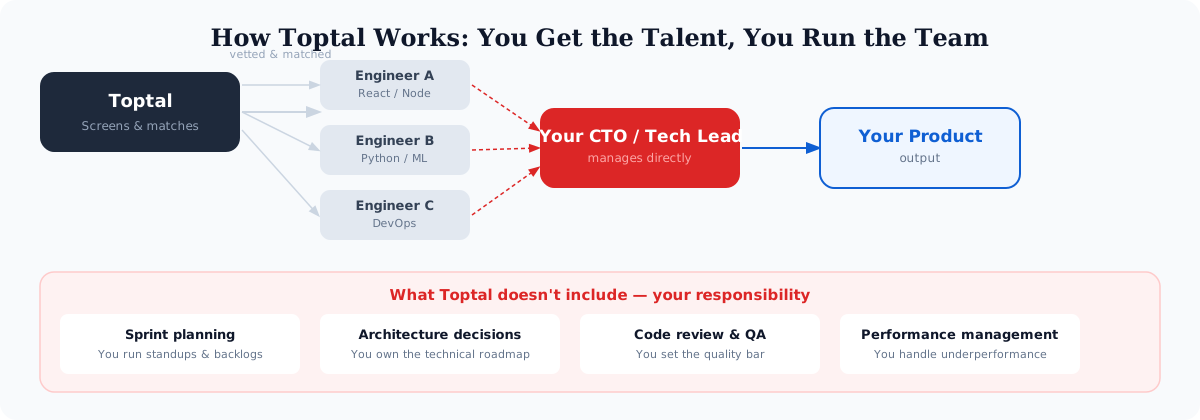
Toptal is a talent marketplace. They screen engineers rigorously — the reported acceptance rate is around 3% of applicants, and the vetting process is genuinely demanding — and then connect those engineers with clients who pay an hourly rate for their time. Toptal handles the screening, the payroll, and the compliance. You handle everything else.
That means: you write the job requirements, you conduct the final interviews, you set up the working environment, you run standups, you make architecture decisions, you review pull requests, you manage the sprint, and you handle performance issues if they arise. The engineer reports to you, works in your process, and builds whatever you direct them to build.
Toptal's strengths are real. The vetting is genuine — the engineers who clear the process are technically capable, and the claimed acceptance rate reflects a meaningful bar. The talent pool is large and diverse, covering most major technologies. The matching process is usually fast. For a company with a strong internal engineering lead who knows exactly what they need and can manage engineers effectively, Toptal is a legitimate way to get high-quality engineers quickly.
Toptal's honest limitations: The hourly rates are high — $60–$150+/hour is typical, which comes to $10,000–$24,000/month per engineer before you've added any management or quality overhead. There is no sprint management, QA, architecture oversight, or code review layer included. You manage the engineers directly, which means the quality of output depends heavily on the quality of your internal technical leadership. If you don't have a strong in-house CTO or VP Engineering, you're getting talent without leadership — which, as the story above illustrates, produces predictable results.
What Squash Apps actually is
Squash Apps is a CTO-led engineering firm. We assemble dedicated pods — typically a combination of senior engineers, QA, and a technical lead — and manage the delivery ourselves. You own the product direction (what to build and in what order). We own the delivery (how it gets built, to what quality standard, and on what timeline).
The distinction matters in practice. When a sprint includes an architectural decision — whether to build a new feature as a separate service or extend the monolith, how to structure the data model for a new entity, whether to use a third-party library or build the component — that decision doesn't land on your desk. It lands on the tech lead's desk, who makes it within the constraints of the overall architecture we're maintaining.
Every PR goes through peer review by another engineer on the pod and a weekly architecture review by a senior lead. QA engineers write test cases and run regression suites before each release. We run standups, sprint reviews, and demos on a structure that we've iterated on across hundreds of projects. The founder's job is to show up to weekly demos and tell us what they want built next.
This model has a cost: it's not the right fit for every company. If you have a strong internal CTO who genuinely enjoys managing engineers and wants to run sprint planning themselves, you're paying for management overhead you don't need. The Toptal model will serve you better and probably cost less.
Side-by-side on the dimensions that matter
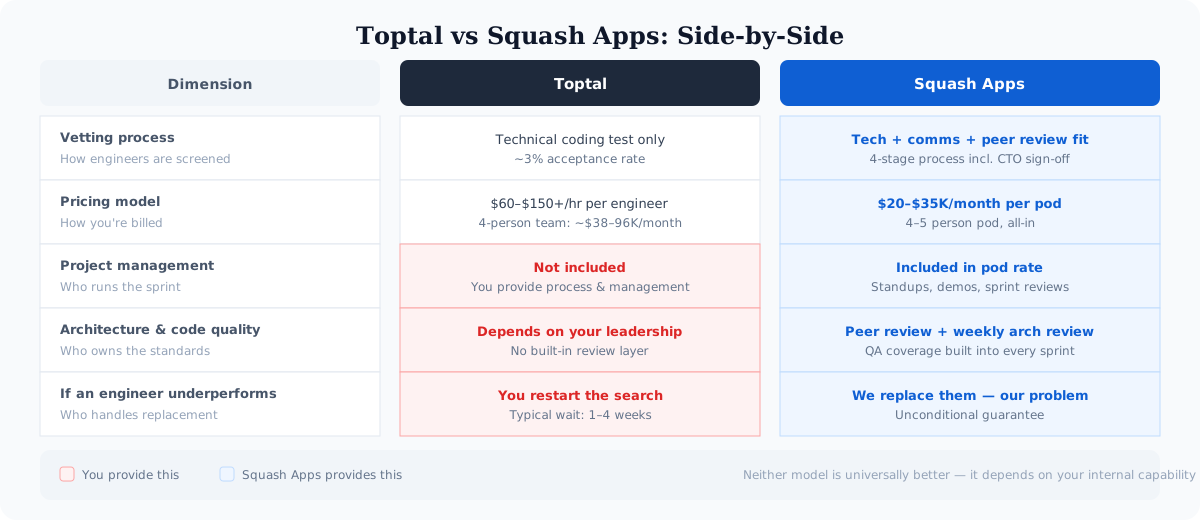
Vetting process. Toptal vets individual engineers — the test is whether a given engineer can write good code. Squash Apps vets engineers through the same four-stage process (CV screen, technical assessment, live code review, CTO sign-off), but we also vet for communication quality, async work habits, and how engineers perform under review. A technically excellent engineer who communicates poorly or who produces code that doesn't hold up in a peer review doesn't pass our process. The distinction: Toptal's vetting measures individual technical capability; ours measures team-fit alongside technical capability.
Pricing model. Toptal prices per engineer per hour. A 4-person team at Toptal rates costs $38,000–$96,000/month depending on the seniority mix. Squash Apps prices per pod — a 4-5 person pod with tech lead, QA, and sprint management included runs $20,000–$35,000/month. The Squash Apps rate is lower because the team is based in India (senior engineers are less expensive there than in the US or Eastern Europe), and because you're buying a managed output rather than raw hourly time.
Project management layer. Toptal: none included. You provide the process and the management. Squash Apps: sprint management, daily standups, weekly demos, and a PM layer are all included in the pod rate. You attend demos and give direction. You don't run the process.
Architecture and code quality. Toptal: depends entirely on the engineers you hire and how well you manage them. Squash Apps: architecture decisions are reviewed by a senior lead; all code goes through peer review before merge; QA coverage is built into the sprint process. You get consistent quality standards regardless of which specific engineers are working in a given week.
What happens when things go wrong. With Toptal, if an engineer underperforms or leaves, you restart the search process — which typically takes 1–4 weeks. With Squash Apps, if an engineer isn't working out, we replace them. That's our operational problem, not yours. In 10+ years of operations, we've had to make fewer than 10 such replacements — but the unconditional nature of the policy is what makes it meaningful.
IP and confidentiality. Both models support standard IP assignment to the client and NDA coverage. Squash Apps has an internal confidentiality policy that prevents engineers from discussing client work outside their pod. Worth confirming with any vendor before a technical discussion begins.
Who should use Toptal
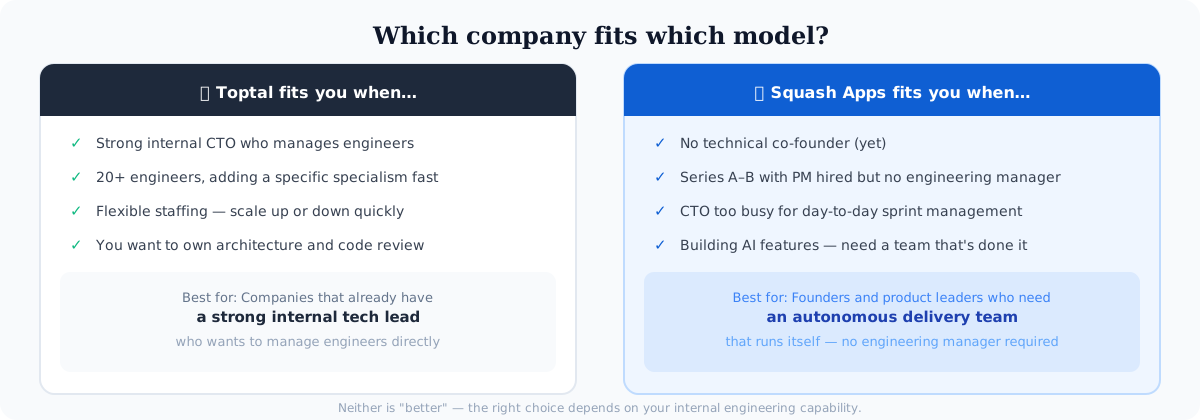
Toptal is the right choice when you have a strong internal CTO or VP Engineering who wants to manage engineers directly, knows exactly what seniority and skills they need, can run sprint planning and architecture reviews themselves, and wants maximum control over the working relationship. The higher per-engineer cost is worth it for the quality of the individual talent and the flexibility of the model. Companies with 20+ engineers who need to add specific specialisms quickly are often well served by the Toptal model.
Who should use Squash Apps
Squash Apps is the right choice when you need the team to operate with a high degree of autonomy — when you want to direct what gets built but not manage how it gets built. This is typically: founders without a technical co-founder who need a team that runs itself; companies at Series A–B who have a product manager but not an engineering manager; companies whose in-house CTO is too busy with architecture and investor relations to also manage day-to-day sprint delivery.
It's also the right choice when you're building AI into a product and need engineers who have actually done this before — RAG pipelines, LLM integration, vector databases, evaluation frameworks. Our AI application development team has built production AI systems, which matters when the technology is moving fast and the cost of architectural mistakes is high.
The staff augmentation service page has current pod configurations and pricing. If you want a 15-minute conversation to figure out which model makes more sense for your situation — no commitment, no pitch — book a call here.
Outsourcing, offshoring, and dedicated teams: clearing up the terminology
The terms get used interchangeably in vendor pitches, which creates real confusion when you're trying to make a decision. Here's a quick glossary of what each actually means in practice.
Outsource software development is the broad category — you're contracting external engineers rather than hiring full-time. It covers everything from a single freelancer on Upwork to a managed engineering firm running your entire product team. The term describes the relationship (external), not the structure (individual vs. team, managed vs. unmanaged).
Hire dedicated developers usually means engineers who work exclusively on your product rather than being shared across multiple clients. Both Toptal contractors and Squash Apps pod members are dedicated — the distinction is who manages them and how they're structured. A dedicated developer without a management layer around them is still an individual; a dedicated pod with a tech lead is a team.
Offshore development team refers to a team located in a significantly different time zone, typically used for cost reasons. India, Eastern Europe, and LatAm are the most common regions. Squash Apps operates from India; Toptal's network spans all three regions. The time zone gap is real — 5–9 hours depending on your location — but async workflows, overlap windows, and well-structured demos largely eliminate this as a day-to-day constraint. The quality differential that once justified paying 3× for US-based contractors has narrowed significantly as senior engineers in India have built track records on complex, globally deployed products.
Remote engineering team is largely synonymous with offshore for practical purposes. The emphasis is on the distributed working model rather than geography. Any managed team engagement today operates remotely by default; the question is whether the remote team has the internal structure to operate well without daily oversight from the client.
The reason these distinctions matter: when you're evaluating whether to use Toptal, Squash Apps, or another option, the real decision isn't "offshore vs. onshore" or "dedicated vs. shared" — it's "do I want to manage individuals, or do I want to buy managed delivery?" Everything else is secondary to that question.
Frequently asked questions
Is Toptal worth the price?
For companies with strong internal engineering leadership who want pre-vetted individual talent: yes, often. The vetting is genuine and the quality is consistent. The caveat is that you're paying premium rates for individuals without a management or quality layer — which is the right trade-off when you have the internal capability to provide that layer yourself.
Can you switch from Toptal to Squash Apps mid-project?
Yes, though it requires a proper transition — codebase review, architecture assessment, and a 2-week ramp period. We've done this several times. The most common trigger is a company realising they don't have the internal bandwidth to manage the team themselves, or a recognition that the architecture needs more oversight than individual contractors provide.
Are there other Toptal alternatives worth evaluating?
Arc.dev (similar marketplace model, slightly lower rates), Turing.com (AI-matched engineers, $35–90/hour range, more variable quality), and BairesDev (LatAm-focused, account-manager-driven model) are all in the same broad category as Toptal. Each has a different vetting approach, pricing model, and geographic focus. The key question for any of them is the same: does the vendor provide a management and quality layer, or are you buying individuals and providing that layer yourself?
How do I outsource software development without losing control of the product?
The short answer: own the what, not the how. Define your product requirements, maintain your roadmap, and attend weekly demos where you review working software and give direction. What you can safely delegate: architecture decisions, sprint planning, code review standards, QA processes, and engineer management. The mistake most founders make is either delegating too much (including product decisions) or too little (trying to run the sprint themselves while the vendor provides the bodies). A well-structured managed team engagement draws a clean line between product ownership (yours) and delivery ownership (theirs).
What should I look for when hiring a dedicated development team?
Five things worth verifying before you sign:
- Does the vendor provide a technical lead, or are you expected to provide direction?
- How are code reviews handled — peer review within the team, or client-side review only?
- What's the replacement policy if an engineer leaves or underperforms?
- Can you speak with a current client at a similar company stage?
- Is QA built into the team or treated as an optional add-on?
These questions cut through most vendor pitch decks faster than any due diligence checklist.
Jai K
Engineering Lead, Squash Apps